
The Benefits of a Pondless Waterfall

Jim Martin is the owner of Cut-Rite Lawn Service in Sandpoint, Idaho, with 25+ years of experience providing trusted lawn care, landscaping, and custom water feature installation across North Idaho.
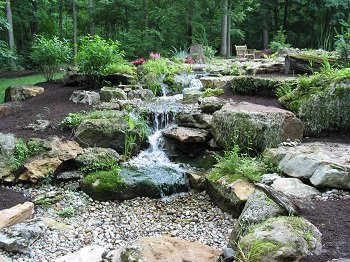
A pondless waterfall is a beautiful water feature that mimics the look and sound of a natural waterfall without the need for a visible pond. Instead of collecting in a pond, the water flows down a stream or cascade and disappears into a hidden underground reservoir where it is filtered and pumped back to the top. This clever design provides the beauty and relaxing atmosphere of moving water while minimizing maintenance and safety concerns. Because of these advantages, pondless waterfalls have become one of the most popular water features for residential landscapes.
1. Low Maintenance
One of the biggest advantages of a pondless waterfall is how easy it is to maintain. Traditional ponds require regular care such as managing fish, controlling algae growth, cleaning debris, and maintaining water quality. With a pondless system, there is no standing pond water exposed to sunlight and organic buildup.
Most pondless waterfalls simply require occasional debris removal, periodic pump maintenance, and topping off the water level during hot weather. The underground reservoir stores the water and keeps it cleaner for longer periods, which dramatically reduces maintenance time.
2. Improved Safety
Safety is another major benefit, especially for households with children or pets. Since there is no deep pond, there is much less risk of accidental falls or drowning. The water disappears into a gravel-covered basin, creating a surface that is safe to walk around and play near.
For families who love the sound and visual appeal of water but worry about safety hazards, a pondless waterfall offers a perfect compromise.
3. Space-Saving Design
Not every yard has enough room for a full garden pond. Pondless waterfalls are extremely flexible and can be built in compact spaces, along slopes, beside patios, or as part of an entryway landscape.
They can be designed as:
- A short cascading waterfall beside a patio
- A winding stream along a garden path
- A dramatic rock waterfall on a hillside
- A small decorative feature for a courtyard
Because the reservoir is hidden underground, the design focuses entirely on natural rock, plants, and flowing water rather than a large open pond.
4. Water Conservation
Pondless waterfalls are also very water-efficient. The water continuously recirculates from the underground basin through the pump and back to the top of the waterfall. This closed-loop system minimizes water loss compared to many decorative fountains or ponds.
Evaporation is usually the only water loss, and it can be easily replaced with a small top-off. Some systems even include automatic fill valves to maintain water levels.
5. Reduced Algae Problems
Standing water exposed to sunlight can easily develop algae blooms. Because pondless waterfalls have minimal exposed water and constant circulation, algae growth is much less of a problem.
The gravel basin and filtration system help trap debris before it can break down in the water, which keeps the water clearer and reduces the need for chemical treatments.
6. Natural Sound and Relaxation
One of the biggest reasons people install water features is the calming sound. The flowing water of a pondless waterfall creates a natural white noise that helps block unwanted sounds like traffic, neighbors, or wind.
The cascading water can also attract birds and wildlife, adding life and movement to your outdoor space. Many homeowners find that the sound of flowing water transforms their yard into a peaceful retreat.
7. Year-Round Visual Interest
A pondless waterfall can provide beauty in every season. In spring and summer, it blends beautifully with surrounding plants and flowers. During autumn, falling leaves create a picturesque landscape. In colder climates, the water can create stunning ice formations when temperatures drop, turning the waterfall into a natural sculpture.
Even when the pump is turned off in winter, the rock structure still acts as a beautiful landscape feature.
8. Cost-Effective Installation
Compared to building a full pond ecosystem with fish, filtration systems, liners, and extensive excavation, pondless waterfalls are generally more affordable to install. They require fewer materials and less complex infrastructure while still delivering an impressive visual impact.
This makes them a great option for homeowners who want a premium landscape feature without the higher cost of a traditional pond.
Conclusion
A pondless waterfall offers the beauty, sound, and tranquility of moving water without the complexity of maintaining a full pond. With benefits such as lower maintenance, improved safety, water efficiency, and flexible design, it is easy to see why these features are becoming increasingly popular in residential landscapes.
Whether installed as a small garden accent or a dramatic backyard centerpiece, a pondless waterfall can transform an ordinary outdoor space into a relaxing natural retreat.